Author: admin_user

  • Systems Beat Content Every Time


    AI Profit Letter. August 12, 2026


    The marketing shortage nobody talks about, and 2 tools that fix it͏‌ ͏‌ ͏‌ ͏‌ 

    AI Profit Letter. Run Your Business at the Speed of Intelligence. from the desk of Scott Hall

    WEDNESDAY, AUGUST 12, 2026

    📗 Free Guide . Just Released


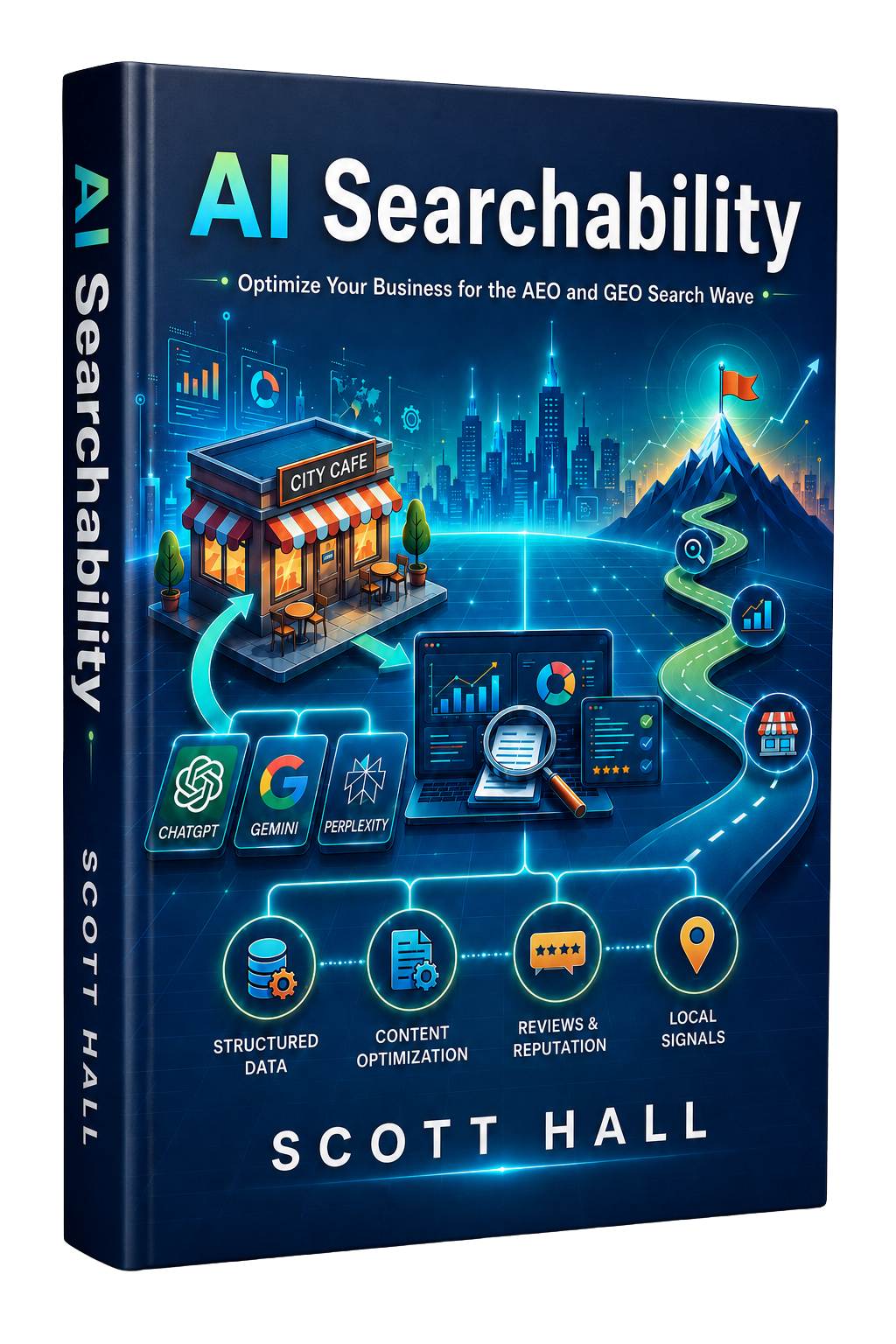
    AI Searchability. Optimize Your Business for the AEO and GEO Search Wave

    You Don’t Have a Reputation Problem. You Have an AI Visibility Problem.

    When a client asks ChatGPT, Gemini, or Perplexity to recommend a firm like yours, AI doesn’t pick the best business. it picks the one it can recommend with confidence. Every business now has two reputations: the one your clients know, and the one AI assembles from your digital footprint. AI Searchability breaks down the four signals AI weighs before it recommends you, and how to make sure the reputation you’ve earned is one it can actually see.

    ▶ Why respected firms are going invisible to ChatGPT, Gemini & Perplexity
    ▶ The 4 Pillars of AI Readiness. and which one carries the most weight
    ▶ How to turn the reputation you’ve earned into evidence AI can verify
    GET THE FREE GUIDE ▶

    Trending this Week:

    Every founder I talk to thinks their marketing problem is a content problem. Write more ads, publish more pages, run more research, feed the machine and hope something sticks.

    That’s backward. The businesses actually pulling ahead figured out months ago that the shortage was never content. It’s systems that keep working after you close the laptop.

    This week’s lineup is two tools built around exactly that idea, plus a global tech company that recently proved what happens when AI stops being a side project and becomes part of how everyone actually works. MORE ▶


    Today’s Issue:

    ▶ 2 tools that build sharper ad campaigns and do the research legwork for you
    ▶ A case study on how a 9,000-person tech company turned a three-day job into a 30-minute one
    ▶ A growth hack for writing ad copy straight from your customers’ own words

    This week’s focus is about building marketing and business systems that keep improving on their own, instead of chasing another one-off AI output.

    Let’s get into it. 👇


    🚀 AI TOOLS OF THE WEEK

    Tool #1

    Adomate

    Summary

    Adomate builds ad concepts for you using your actual marketing data instead of a blank page. It pulls from your Meta ad account, Meta’s Ad Library, and reviews sitting on Trustpilot and Amazon, then turns all of it into branded ad ideas you can trace straight back to the data that inspired them.

    Why It Matters

    Most business owners guess at what their ads should say, then find out three weeks and a few hundred wasted dollars later whether the guess was any good. Adomate skips the guessing part entirely. It builds concepts from customer language and campaigns that already proved themselves, instead of whatever sounded good in a Tuesday brainstorm.

    Scott’s Take

    “Nobody needs more ads. They need ads that say something a customer would actually stop scrolling for. When your copy comes from real reviews and campaigns that already worked, you’re not hoping it lands. You already know it will.”


    Tool #2

    Webhound

    Summary

    Webhound runs AI research agents that don’t quit after one search. Point one at a question and it keeps digging, organizing what it finds, and refining the results over time until you’ve got a structured dataset or a fully cited report instead of a pile of open browser tabs.

    Why It Matters

    Research eats more founder hours than almost anything else on this list. Competitor moves, market shifts, what customers actually think, all of it takes real time to track down properly. Webhound cuts most of that manual digging out while still handing you sources you can trust, not a summary you have to double check yourself.

    Scott’s Take

    “Good marketing has always started with knowing something your competitor didn’t bother finding out. Webhound hands small businesses the kind of research depth that used to require a full team, and it does that without you having to babysit the process.”


    Sponsored


    Chase for Business. business checking built for growing companies

    Business checking built for growing companies. See Chase for Business ▶

    📖 AI IN THE REAL WORLD

    How a 9,000-Person Tech Company Turned a 3-Day Job Into 30 Minutes

    According to OpenAI, NTT DATA Group didn’t roll out its Codex tool to a handful of developers and leave it there. The global technology company expanded access to roughly 9,000 employees across technical and nontechnical teams, betting that the real gains would come from spreading AI across the whole organization instead of parking it inside one department.

    The clearest result showed up in incident analysis. Work that used to take five experienced engineers a full three days got done by Codex in about 30 minutes. That result pushed employees to start applying AI well beyond development work, into reporting, document analysis, workflow automation, and expense processing, tasks that show up in nearly every department, not only engineering.

    None of this happened by accident. NTT DATA built company-wide training, governance, best practices, and internal support before expecting employees outside of engineering to trust the tool with real work. That groundwork is a big part of why adoption spread instead of stalling in one corner of the business.

    Scott’s Take

    “The lesson here isn’t that you need 9,000 employees or an enterprise AI budget to see results like this. The lesson is that the real gains show up once AI becomes part of how everyone works, not a tool one department quietly uses on the side. Find the repetitive work eating your week and build a small system around it. That’s the same principle NTT DATA proved at scale, only bigger.”

    READ THE FULL CASE STUDY ▶

    Sponsored


    Google Workspace for Business. email, docs and collaboration tools for teams

    Email, docs and collaboration tools your whole team can share. See Google Workspace ▶

    ⚡ AI GROWTH HACK OF THE WEEK

    Turn Customer Reviews Into Ad Copy That Actually Converts

    The Strategy:

    Stop writing ad copy based on what you assume customers want to hear. Your customers already told you exactly what matters to them, in their own words, every time they left a review. The move is pulling that language out and turning it directly into marketing.

    1. Collect reviews from your own business, your competitors, Amazon, and Trustpilot.

    2. Run them through Adomate to spot the themes and messaging that keep showing up.

    3. Have AI sort those reviews into the pain points customers mention most and the outcomes they actually want.

    4. Turn those insights into new Facebook ads, landing pages, email campaigns, and sales copy.

    The AI Prompt to Steal

    “Feed AI these customer reviews and ask it to pull out the five complaints customers repeat most often. From those complaints, have it draft three Facebook ads, two email subject lines, one landing page headline, and one call-to-action, built entirely from the words customers actually used.”

    Why This Works:

    A review is a customer handing you the exact words that would make them buy, for free, every single time they leave one. AI only helps you catch the patterns faster than you’d catch them reading two hundred reviews by hand, then hands you copy that sounds like your customer instead of a marketing team guessing on their behalf.


    Wrapping Up

    This week’s tools both point at the same shift. Neither one exists to help you produce more content. Both exist to help you make better decisions with less manual work standing between you and the result. Adomate builds ads from data instead of guesswork. Webhound hands you research depth that used to take a full team.

    NTT DATA’s story backs up the same idea at a completely different scale. The biggest win wasn’t a single flashy use case. It was spreading AI across nine thousand people and every department they touch, then giving those people the training and structure to actually trust it with real work.

    The businesses pulling ahead right now aren’t the ones replacing people with AI. They’re the ones handing their people better systems, then getting out of the way. That’s true whether you’re running a five-person shop or a global enterprise.

    New tools will keep showing up every week, and most of them won’t matter to your business. The job isn’t chasing all of them. It’s finding the few that solve a real problem you already have, then sticking with them long enough to see what they actually save you.

    Keep profiting,

    Scott Hall

    AI Profit Letter

    You’re receiving this because you subscribed to the AI Profit Letter.

    Better Online Info LLC | AI Profit Letter | 2150 NJ-35, Suite 250, Sea Girt, NJ 08750

    Unsubscribe


  • Your AI tools don’t talk to each other


    AI Profit Letter – August 5, 2026


    Four tools, four logins, and not one of them knew the others existed. This week: making them coordinate.

    ‌ ‌ ‌ ‌ ‌ ‌ ‌ ‌ ‌ ‌ ‌ ‌ ‌ ‌ ‌ ‌ ‌ ‌ ‌ ‌ ‌ ‌ ‌ ‌ ‌ 


    AI Profit Letter – Run Your Business at the Speed of Intelligence – from the desk of Scott Hall

    WEDNESDAY, AUGUST 5, 2026

    📗  Free Guide  ·  Just Released


    AI Searchability — Optimize Your Business for the AEO and GEO Search Wave

    You Don’t Have a Reputation Problem — You Have an AI Visibility Problem.

    When a client asks ChatGPT, Gemini, or Perplexity to recommend a firm like yours, AI doesn’t pick the best business — it picks the one it can recommend with confidence. Every business now has two reputations: the one your clients know, and the one AI assembles from your digital footprint. AI Searchability breaks down the four signals AI weighs before it recommends you, and how to make sure the reputation you’ve earned is one it can actually see.

    ▶ Why respected firms are going invisible to ChatGPT, Gemini & Perplexity
    ▶ The 4 Pillars of AI Readiness — and which one carries the most weight
    ▶ How to turn the reputation you’ve earned into evidence AI can verify

    GET THE FREE GUIDE →

    Trending this Week:

    I had a client tell me last week that she’d finally “gone all in on AI.” She had one assistant drafting emails, another summarizing sales calls, a third cranking out marketing copy, and a fourth trying to keep the project board updated. Four tools, four logins, and not one of them had any idea the others existed.

    That’s most businesses right now. Everybody’s stacking AI tools like they’re collecting trading cards, and nobody’s asking whether those tools actually work together.

    Here’s the shift nobody’s talking about: the next wave of AI is less about making one person faster and more about getting an entire team, and every tool that team relies on, moving in the same direction without you micromanaging every handoff. MORE →


    Today’s Issue:

    ▶ 3 tools that act like teammates instead of solo assistants
    ▶ A case study on AI helping hundreds of people think together
    ▶ A growth hack for building your own AI operating system

    This week’s focus is building an AI setup where your tools coordinate instead of operating in their own little silos.

    Let’s get into it. 👇


    🚀  AI TOOLS OF THE WEEK

    Tool #1

    WorkBuddy

    Summary

    WorkBuddy is an AI agent built for regular office work. Instead of handing every request to one generalist bot, you route tasks to specialized AI agents and compare their answers before anything lands on your desk.

    Why It Matters

    Most companies are running one all-purpose assistant and expecting it to be great at everything from copywriting to spreadsheet cleanup. That’s asking a lot from one tool.

    Scott’s Take

    “I don’t want a single AI trying to be my copywriter, analyst, project manager, and scheduler all at once. I want a bench. WorkBuddy treats AI more like a staff than a Swiss Army knife.”


    Tool #2

    AI Brand Kits

    Summary

    Feed it a website URL or a color palette and AI Brand Kits builds out a full design system, then exports a file your dev tools can actually read and follow.

    Why It Matters

    The more AI tools you use to build pages and marketing assets, the easier it becomes for your brand to look like it was designed by five different people. This keeps everyone on the same page, literally.

    Scott’s Take

    “Your brand used to live in a style guide nobody opened. Now it needs to live somewhere your AI tools can read it too, or you’ll end up with a website that looks like a ransom note.”


    Tool #3

    Upstream

    Summary

    Upstream is an AI email client that sorts your inbox, drafts replies, flags what actually needs your attention, and mutes the noise instead of burying it under fifty newsletter unsubscribes.

    Why It Matters

    Email eats more of the workday than most owners want to admit. Upstream cuts the busywork so you can spend your attention on the messages that move the business forward.

    Scott’s Take

    “The win here has less to do with answering email faster and more to do with skipping fifty tiny decisions a day about what deserves a response at all. That mental tax adds up more than people admit.”


    Sponsored


    Chase for Business — business checking built for growing companies

    Business checking built for growing companies. See Chase for Business →

    📖  AI IN THE REAL WORLD

    The AI Experiment That Got 277 Strangers to Agree on Something

    A recent VentureBeat piece covers something called hyper-communication, where AI agents link large groups of people into one coordinated conversation instead of replacing anyone’s thinking.

    In one demo, 277 people took part in a live, AI-assisted discussion about America’s biggest innovations over the last two and a half centuries. Rather than letting that many voices turn into noise, the AI split people into smaller groups and passed ideas back and forth until the whole crowd landed on conclusions together.

    Nobody handed a decision to a machine. The machine helped a few hundred humans get organized enough to make one.

    Scott’s Take

    “This is the part of AI that doesn’t get enough attention. Everybody’s worried about AI replacing one person’s job. The bigger opportunity is AI helping fifty people stop stepping on each other. Coordination breaks down way before execution does.”

    READ THE FULL CASE STUDY →

    Sponsored


    Google Workspace for Business — email, docs and collaboration tools for teams

    Email, docs and collaboration tools your whole team can share. See Google Workspace →

    ⚡  AI GROWTH HACK OF THE WEEK

    Turn Your Scattered AI Tools Into One System

    The Strategy:

    Stop treating AI like a pile of separate apps. Give each tool a lane, a specific job inside your workflow, so they function like a team instead of a junk drawer of subscriptions.

    1. Assign the research and drafting work. Use a tool like WorkBuddy to pull information and produce first drafts you can edit instead of starting from a blank page.

    2. Lock down consistency. Run a tool like AI Brand Kits so every asset, whether it’s a landing page or a social graphic, follows the same visual rules automatically.

    3. Hand off communication triage. Let a tool like Upstream sort and prioritize your inbox so the important conversations rise to the top on their own.

    4. Review instead of execute. Your job shifts from doing every step yourself to checking the output and making the calls only you can make.

    The AI Prompt to Steal

    “Act as an operations consultant. Review this business workflow: [describe your workflow]. Break it into individual responsibilities and tell me which tasks should go to a specialized AI tool versus staying with a human. Explain your reasoning for each one.”

    Why This Works:

    Most businesses use AI one task at a time and wonder why it still feels like extra work. The companies pulling ahead are building setups where each tool owns a specific piece of the process, which frees up actual humans to spend their time making decisions instead of babysitting software.


    Wrapping Up

    Here’s the thread connecting everything this week. WorkBuddy shows what happens when AI tools split up the work instead of one bot trying to do it all. AI Brand Kits keeps your output looking like it came from one company, not five. Upstream clears the inbox clutter that eats your morning before you’ve done a single real task.

    The VentureBeat case study scales that same idea up, several hundred people at a time. Entire groups are starting to think, talk, plan, and solve problems together instead of one person moving faster alone.

    That shift is worth your attention, whether you run a five-person shop or a fifty-person one. The businesses that come out ahead over the next few years won’t simply have employees who happen to use AI. They’ll have built something closer to an operating system, where AI connects the people, keeps hold of the knowledge, moves the work forward, and doesn’t need someone to chase it down.

    So the next time you look at a new AI tool, skip the obvious question. Don’t ask what task it automates. Ask how it helps your business work together better. That answer might end up mattering more than any single feature on the list.

    Keep profiting,

    Scott Hall

    AI Profit Letter

    You’re receiving this because you subscribed to the AI Profit Letter.

    Better Online Info LLC  |  AI Profit Letter  |  2150 NJ-35, Suite 250, Sea Girt, NJ 08750

    Unsubscribe
      ·  
    View in browser


  • Stop dabbling in AI


    AI Profit Letter – July 22, 2026


    Horsepower means nothing if you’re still steering every turn. This week: committing to AI instead of dabbling.


    AI Profit Newsletter – Run Your Business at the Speed of Intelligence

    WEDNESDAY, JULY 22, 2026

    📗  Free Guide  ·  Just Released


    AI Searchability — Optimize Your Business for the AEO and GEO Search Wave

    You Don’t Have a Reputation Problem — You Have an AI Visibility Problem.

    When a client asks ChatGPT, Gemini, or Perplexity to recommend a firm like yours, AI doesn’t pick the best business — it picks the one it can recommend with confidence. Every business now has two reputations: the one your clients know, and the one AI assembles from your digital footprint. AI Searchability breaks down the four signals AI weighs before it recommends you, and how to make sure the reputation you’ve earned is one it can actually see.

    ▶ Why respected firms are going invisible to ChatGPT, Gemini & Perplexity
    ▶ The 4 Pillars of AI Readiness — and which one carries the most weight
    ▶ How to turn the reputation you’ve earned into evidence AI can verify

    Free to read · No sign-up wall

    Trending this Week:

    Business owners have never had more horsepower under the hood. New AI systems that remember your priorities, plan your day, and speed up creative work are showing up everywhere you look.

    But horsepower means nothing if you’re still the one steering every single turn yourself, and it means even less if you’re only using AI to bolt a shortcut onto the surface of your business.

    This week’s lineup goes deeper than another shiny app.


    Today’s Issue:

    ▶ 3 tools built to remember your priorities, your creative style, and your calendar
    ▶ A case study on a construction company’s multimillion-dollar bet on AI at the job site
    ▶ A growth hack for building your own AI Chief of Staff briefing every morning

    This week’s focus is about who, or what, actually carries the mental load in your business, and what it looks like to commit to AI instead of only dabbling in it.

    Let’s get into it. 👇


    🚀  AI TOOLS OF THE WEEK

    Tool #1

    Miora

    Summary

    Miora is a creative studio built around memory instead of a blank canvas. You start with a single idea, build multimodal assets inside an editable workspace, and the tool holds onto what it learns about your style so the next project starts from somewhere further along instead of square one.

    Why It Matters

    Most creative AI tools treat every session like the first one. That means re-explaining your brand voice, your visual style, and your preferences every time you sit down to create something new. Miora is built to skip that step by turning your taste into a skill it can reuse.

    Scott’s Take

    “Random content generation was never the hard part. Teaching a tool what good actually looks like for your brand, and having it remember that, is where the real value shows up.”


    Tool #2

    Bond

    Summary

    Bond positions itself as an AI Chief of Staff for founders and executives. It connects into the tools you already run your business through, learns how your company actually operates, and turns a pile of scattered work into a short list of what deserves your attention right now.

    Why It Matters

    Most business owners lose hours every week chasing updates, tracking loose threads, and figuring out what’s actually urgent. Bond is built to surface blockers, prep you for meetings, draft the follow-ups you’ve been putting off, and use context about your business to help decide what moves first.

    Scott’s Take

    “I don’t need another chatbot sitting around waiting for the perfect question. I want something that understands my business well enough to point out what I’m missing before it becomes a problem.”


    Tool #3

    Akiflow

    Summary

    Akiflow pulls your tasks and calendars out of every app you use and puts them in one place, turning a to-do list that never ends into a schedule you can actually look at and follow.

    Why It Matters

    A task list tells you what’s supposed to happen. It says nothing about when you’re actually going to do it. Akiflow forces your priorities to compete for real blocks of time instead of sitting untouched on a list that keeps growing.

    Scott’s Take

    “Planning gets honest fast once a task has to fight for a spot on your calendar. You find out quickly what’s actually important and what only sounded important on paper.”


    Sponsored


    Chase for Business — Business Checking

    📖  AI IN THE REAL WORLD

    Why McCarthy Building Is Betting Millions on AI at the Job Site

    According to Construction Dive, McCarthy Building Companies, a St. Louis-based contractor, signed a multiyear, multimillion-dollar agreement with Palantir Technologies in June 2026 to build an AI-native system called Pulse. Pulse is designed to hand field teams real-time jobsite insights, scenario planning, risk analysis, and decision orchestration, so superintendents, project managers, and field operators can make better calls at every phase of a project, from design through execution. McCarthy is also using Palantir’s Ontology platform to connect contracts, estimating, and execution, pieces of the business that usually live in separate systems that don’t talk to each other.

    McCarthy’s Chief Digital Officer, Justin McFarland, said Palantir brings “exceptional engineering talent and strategic thought leadership that has accelerated our ability to transform complex operational concepts into scalable solutions faster than we thought possible.” Equally notable is the structural shift behind the deal: McCarthy is embedding Palantir engineers directly inside its own tech team and building enterprise software in-house instead of leaning entirely on outside vendors.

    That shift reflects a broader pattern in the industry, where large contractors are starting to understand their own operational needs better than an outside vendor ever could, pushing more of them toward deep partnerships with later-stage startups willing to customize instead of selling a one-size-fits-all platform.

    Scott’s Take

    “The McCarthy deal is worth watching because of what it commits to beyond the software. Pulling engineers in-house and wiring contracts, estimating, and execution into one system is a bigger move than slapping a dashboard on top of a messy operation. The construction industry has been slow to push AI past the back office, and deals like this show what it looks like when a contractor goes all in instead of dabbling.”

    READ THE FULL CASE STUDY →

    Sponsored


    Google Workspace for Business

    ⚡  AI GROWTH HACK OF THE WEEK

    Build a Daily AI Chief of Staff Briefing

    The Strategy:

    Use Bond to figure out what actually deserves your attention, Akiflow to protect real time for it, and Miora to speed up whatever creative work comes out of those priorities.

    1. Start your day by asking Bond to identify your three highest-leverage priorities, flag any commitments at risk, and point out one issue you might be overlooking.

    2. Move those three priorities into Akiflow and assign each one a specific block of time on your calendar.

    3. If a priority involves a campaign, presentation, launch, or creative asset, move it into Miora. Build the first version, refine the direction, and save what you learn as a reusable skill so the next project starts further ahead.

    4. At the end of the day, compare what Bond flagged as important against what you actually got done.

    The AI Prompt to Steal

    “Act as my Chief of Staff. Based on the following projects, meetings, commitments, and deadlines, identify the three highest-leverage actions I should complete today. Flag one risk I may be overlooking and one task I should delegate, delay, or remove. For each priority, explain the business outcome it could move forward.”

    Why This Works:

    Most entrepreneurs don’t need a longer task list. They need a sharper filter for deciding what’s on it. This workflow makes AI help you prioritize before you start working instead of after you’re already buried. Akiflow turns those priorities into commitments you can’t quietly ignore, and Miora keeps the creative work moving without starting over each time. The result is less of your day spent organizing work and more of it spent making decisions that actually move the business.


    Wrapping Up

    This week’s lineup kept circling one question that doesn’t get asked enough. What should AI actually remember about you and your business?

    Miora holds onto your creative direction so every new project doesn’t start from a blank canvas. Bond learns the context behind your company so it can flag what matters next before you have to go looking for it. Akiflow takes your scattered commitments and turns them into a schedule you can see and act on.

    McCarthy’s bet on Palantir shows this same idea playing out at a completely different scale. Pulse connects contracts, estimating, and execution into one system instead of leaving them scattered across separate tools, and McCarthy is embedding outside engineers directly into its own team instead of keeping AI at arm’s length. Going that deep, connecting fragmented systems and pulling engineering talent in-house, is what separates a real commitment to AI from a dashboard bolted onto business as usual.

    Maybe the goal was never to have AI do everything. Maybe it’s building systems, whether that’s a founder’s daily priorities or a contractor’s entire operation, that carry the coordination, protect your attention, and leave more room for the judgment calls only people can make.

    Keep profiting,

    Scott Hall

    AI Profit Letter

    You’re receiving this because you subscribed to the AI Profit Letter.

    Better Online Info LLC  |  AI Profit Letter  |  2150 NJ-35, Suite 250, Sea Girt, NJ 08750

    Unsubscribe
      ·  
    View in browser

    {{ TrackView }}


  • You’re probably overpaying for AI


    AI Profit Letter – July 8, 2026


    You don’t need the most powerful model on the planet to summarize an email. Match the tool to the task.


    AI Profit Newsletter – Run Your Business at the Speed of Intelligence

    WEDNESDAY, JULY 8, 2026

    📗  Free Guide  ·  Just Released


    AI Searchability — Optimize Your Business for the AEO and GEO Search Wave

    You Don’t Have a Reputation Problem — You Have an AI Visibility Problem.

    When a client asks ChatGPT, Gemini, or Perplexity to recommend a firm like yours, AI doesn’t pick the best business — it picks the one it can recommend with confidence. Every business now has two reputations: the one your clients know, and the one AI assembles from your digital footprint. AI Searchability breaks down the four signals AI weighs before it recommends you, and how to make sure the reputation you’ve earned is one it can actually see.

    ▶ Why respected firms are going invisible to ChatGPT, Gemini & Perplexity
    ▶ The 4 Pillars of AI Readiness — and which one carries the most weight
    ▶ How to turn the reputation you’ve earned into evidence AI can verify

    Free to read · No sign-up wall

    Trending this Week:

    For the last couple years, the AI arms race has been about one thing: bigger. Bigger models, bigger context windows, bigger compute bills. I get the appeal. I’ve fallen for “biggest equals best” myself more than once in my career.

    But something’s shifting. Smart businesses are finally asking a question that should’ve come up years ago: do I actually need the most powerful model on the planet to summarize an email?

    Turns out, most of the time, the answer is no. MORE


    This week’s theme on AI tools is simple:

    Stop defaulting to your most expensive AI tool for every job. Match the tool to the task, and watch your costs drop while your output stays sharp.

    Today’s Issue:

    ▶ 2 tools that handle specific marketing work without overkill
    ▶ A case study on why smaller AI models might be the smarter business bet
    ▶ A growth hack for auditing your AI stack so you stop overpaying for horsepower you don’t need

    Let’s get into it. 👇


    🚀  AI TOOLS OF THE WEEK

    Tool #1

    Spira

    Summary

    Spira runs autonomous AI influencers that manage your social media around the clock. It spots trends, writes content in your brand voice, and publishes to TikTok, Instagram, and X without someone babysitting the calendar.

    Why It Matters

    Most businesses don’t lose at social media because their content is bad. They lose because they can’t keep up the pace. Spira treats your social presence like a system that’s always running instead of a task someone remembers to do on Fridays.

    Scott’s Take

    “I’ve watched too many businesses treat social media like a chore list. Post, forget, scramble next week, repeat. Tools like Spira flip that script. The goal isn’t replacing your voice. It’s making sure your voice actually shows up every day instead of every other Tuesday.”


    Tool #2

    Sami

    Summary

    Sami automates ad management across Google, Meta, LinkedIn, and YouTube. It applies rules that pause weak campaigns, shift budgets, and adjust pacing in real time, no human required to babysit the dashboard.

    Why It Matters

    Manual ad management gets harder the bigger you scale. Sami pulls the repetitive decisions off your plate so your team can spend time on strategy instead of staring at performance graphs all day.

    Scott’s Take

    “Automation earns its keep when it kills the boring decisions, not the important ones. Nobody got promoted for noticing a campaign underperformed at 2am. Let the software catch that. Save your brain for the calls that actually need a human.”


    📖  AI IN THE REAL WORLD

    Why Smaller AI Models May Be the Smartest Business Decision You Make

    A recent industry report points to a shift that’s been building for a while: companies are routing everyday tasks to smaller, cheaper models instead of defaulting to the biggest one available, and getting results that are nearly identical.

    A few data points worth sitting with: one legal AI company cut its inference costs threefold by blending large and small models for different tasks. Industry voices are now predicting that a majority of AI workloads could eventually run on models that cost a fraction of what today’s frontier models charge.

    Scott’s Take

    “This is cloud computing all over again. Remember when everyone wanted the biggest server money could buy? Then businesses figured out they needed enough horsepower for the job in front of them, not a server farm for sending a newsletter. AI’s heading the same direction. The winners won’t be the companies bragging about which model they use. They’ll be the ones quietly routing work to whatever tool actually gets the job done for the least money.”

    READ THE FULL CASE STUDY →

    ⚡  AI GROWTH HACK OF THE WEEK

    Audit Your AI Stack for Cost and Efficiency

    The Strategy:

    Stop defaulting to your most advanced model for every single task. Some work genuinely needs top-tier intelligence. Most of it doesn’t.

    1. List it out. Write down every AI task your business runs in a typical week.

    2. Sort by complexity. Separate the high-stakes work (strategy, client deliverables, analysis) from the routine stuff (summaries, categorization, first drafts).

    3. Reserve the premium tools. Save your most expensive AI for the decisions that actually move the needle.

    4. Go specialized where it makes sense. Tools built for one job, like Spira or Sami, often beat a general-purpose chatbot trying to do everything at once.

    The AI Prompt to Steal

    “Act as an AI operations consultant. Review the following list of AI tasks my business performs: [insert tasks]. Categorize each task as High Intelligence, Medium Intelligence, or Routine Automation. Recommend where I can reduce costs without sacrificing quality and explain why.”

    Why This Works:

    Most businesses overspend on AI for the same reason people overspend on gym memberships. They assume more power means more results. Most of your weekly AI tasks are routine work that a cheaper, faster tool can knock out fine. Save the muscle for the work that actually needs it.


    Wrapping Up

    This week’s tools point at the same shift. Spira keeps your social presence running without a full-time team behind it. Sami pulls the repetitive grind out of ad management so your team can think instead of monitor.

    The case study makes the bigger point obvious. AI is entering a phase where efficiency matters as much as raw intelligence. The businesses pulling ahead aren’t the ones with access to the biggest model. They’re the ones who built smarter systems around the models they already have.

    It’s easy to get distracted by every new model launch. The businesses building something that lasts are asking a different question: what’s the simplest way to actually solve this problem?

    That’s the mindset that’ll define the next wave of AI-powered companies.

    Keep profiting,

    Scott Hall

    AI Profit Letter

    You’re receiving this because you subscribed to the AI Profit Letter.

    Better Online Info LLC  |  AI Profit Letter  |  2150 NJ-35, Suite 250, Sea Girt, NJ 08750

    Unsubscribe
      ·  
    View in browser

    {{ TrackView }}


  • The 4-day experiment that changed how SharkNinja works


    AI Profit Letter – July 1, 2026


    Most companies treated AI like a side experiment. That phase is over — here’s the playbook companies are copying.

    AI Profit Newsletter – Run Your Business at the Speed of Intelligence

    WEDNESDAY, JULY 1, 2026

    Hey, before we get started…

    I’m looking for a few business owners wrestling with where AI actually fits inside their company. My team has 3 spots open next week for a private working session focused on your biggest operational or workflow bottleneck. If you want to talk it through, just hit reply with “interested.”

    Trending this Week:

    Most companies spent the last year treating AI like a side experiment. A pilot here, a free trial there, a chatbot nobody really uses.

    That phase is over.

    The businesses pulling ahead right now don’t have the most subscriptions. They’ve stopped waiting for permission and started letting employees experiment with AI as part of their actual job. Using AI on the side saves you a few hours a week. Letting your whole team experiment with it changes how fast the company learns.

    SharkNinja’s CEO made the same bet earlier this year, and it’s becoming the playbook other companies are starting to copy.

    MORE


    Today’s Issue:

    ▶ 3 AI tools that fix the parts of work nobody else is paying attention to
    ▶ A case study on what happens when you let an entire company experiment with AI at once
    ▶ A growth hack to turn what your team already knows into content you can actually publish

    This week’s focus is on culture, not software. The tools matter, but only once people feel safe enough to actually use them.

    Let’s get into it. 👇


    🚀  AI TOOLS OF THE WEEK

    Tool #1

    Alai

    Summary

    An AI design platform that locks your brand’s fonts, colors, and tone into a single system, so anyone on the team can generate a presentation, ad, or social graphic that stays on-brand without a designer checking every file.

    Why It Matters

    The more content AI helps your team produce, the easier it is for your brand to start looking inconsistent. Alai solves the problem before it starts by giving everyone the same starting point.

    Scott’s Take

    “Most businesses don’t have a content problem. They have a consistency problem. The faster AI lets you produce, the more your brand system has to hold everything together.”


    Tool #2

    readywhen

    Summary

    An AI chief of staff that tracks decisions and commitments across Slack, email, meetings, and documents, then drafts the follow-up, brief, or status update before anyone has to ask for one.

    Why It Matters

    Important decisions get buried in conversations constantly. readywhen makes sure commitments actually turn into action instead of disappearing into someone’s inbox.

    Scott’s Take

    “Leadership often comes down to remembering a hundred moving pieces at once. readywhen takes that off your plate so you can spend your time driving outcomes instead of tracking them.”


    Tool #3

    AirJelly

    Summary

    An always-on desktop agent that watches how you work, captures intent, and starts managing your tasks and commitments without you typing a single to-do list entry.

    Why It Matters

    Most productivity tools depend on people remembering to log their own tasks. AirJelly removes that step entirely by understanding the work as it happens.

    Scott’s Take

    “The next wave of productivity probably won’t be a better to-do list app. It’ll be a system that already knows your priorities before you’ve written them down.”


    📖  AI IN THE REAL WORLD

    Why SharkNinja Skipped the Strategy Memo and Ran a Hackathon Instead

    SharkNinja’s CEO noticed something a lot of leaders are running into right now. Some employees were diving headfirst into AI, while others hadn’t touched it once. Instead of bringing in consultants to write a top-down adoption plan, he paused normal operations for four days and ran a company-wide hackathon called “Jailbreak.”

    Employees built their own tools to fix operational headaches. Teams used AI to speed up product development and marketing workflows. AI systems pulled together consumer feedback and market demand on the spot. People across every department learned by actually doing it, not by sitting through a training deck.

    The most important outcome wasn’t even the tools that got built. It was proof that the best ideas didn’t only come from leadership or the engineering team. They came from people nobody would’ve picked to lead an AI initiative.

    Scott’s Take

    “This is the story I keep coming back to. AI adoption comes down to a culture call more than a technology rollout. The companies moving fastest are the ones that hand people room to experiment instead of waiting on instructions from the top.”

    READ THE FULL CASE STUDY →

    ⚡  AI GROWTH HACK OF THE WEEK

    Turn What Your Team Already Knows Into Content You Can Publish

    Stop starting from a blank page every time you need content. Your team already has the material. It’s buried in meetings, Slack threads, and customer calls nobody wrote down.

    The Strategy:

    Allow readywhen to capture decisions, customer feedback, and project updates as they happen in your normal meetings. Once a pattern shows up — a recurring customer win, a product fix people keep mentioning — hand it to Alai and turn it into something postable. Let AirJelly track the follow-through so good ideas don’t quietly die before anyone acts on them.

    1. Capture the Knowledge. Allow readywhen to pull decisions, customer insights, and project updates out of your meetings and conversations automatically.

    2. Spot the Pattern. Look for recurring themes: customer wins, product improvements, or complaints people keep bringing up.

    3. Turn It Into Content. Use Alai to quickly transform those insights into social graphics, presentations, or marketing content.

    4. Track the Follow-Through. Let AirJelly make sure those ideas move from a Slack message into something that actually gets published.

    The AI Prompt to Steal

    “Review the following meeting notes and decisions. Identify three customer success stories, three content opportunities, one case study idea, and one social media campaign concept. Present each with a recommended headline and key takeaway.”

    Why This Works:

    Most businesses already generate valuable insight internally every single week. Customer conversations, team meetings, and product updates are full of material that could be shared publicly. This system stops you from losing it.


    Wrapping Up

    This week’s tools all point at the same idea: organizational memory. Alai keeps your brand consistent. readywhen catches the decisions. AirJelly makes sure nothing falls through.

    The SharkNinja story backs up the bigger lesson. The companies winning with AI right now don’t necessarily have the biggest budget or the fanciest tech stack. They have a culture where people are actually allowed to experiment, learn, and solve their own problems.

    As AI gets cheaper and easier to access, the edge stops being about who has the tool. Every company can buy the same software. Fewer companies can build a system that helps their people actually use it.

    The ones who figure that out first won’t only move faster. They’ll learn faster. And right now, learning speed might be the only competitive advantage that actually holds up.

    Keep profiting,

    Scott Hall

    AI Profit Letter

    You’re receiving this because you subscribed to the AI Profit Letter.

    Better Online Info LLC  |  AI Profit Letter  |  2150 NJ-35, Suite 250, Sea Girt, NJ 08750

    Unsubscribe
      ·  
    View in browser

    {{ TrackView }}


  • The time you saved with AI is leaking out the back door.


    AI Profit Letter – June 24, 2026

    Most businesses saved time with AI this year. Almost none can tell you what they did with it.

    AI Profit Newsletter – Run Your Business at the Speed of Intelligence

    WEDNESDAY, JUNE 24, 2026

    Hey, Before We Get Started…

    I’m looking for a few business owners dealing with real-world AI implementation bottlenecks inside your company. My team has 3 spots open next week for a private working session focused on your biggest operational or workflow challenge. If you want to talk through it, just hit reply with “interested.”

    Trending this Week:

    Most businesses spent this year bragging about how much time AI saved them. Hours back. Tasks gone. Inboxes empty by lunch. Almost none of them can tell you what they did with the time.

    Boston Consulting Group put out research this month making the case that this is the real fault line in AI adoption right now. Saving time isn’t the hard part. Most regular AI users are already doing that. The hard part is what happens next, and most companies still don’t have an answer.

    The businesses pulling ahead figured out where their saved hours go before AI ever gave them any. Everyone else is still deciding on the fly, after the time’s already gone.

    MORE →

    In Today’s Issue

    →  3 AI tools that turn saved time into actual output

    →  A case study on why saved time disappears without a plan

    →  A growth hack that turns one piece of work into four

    🔧  AI TOOLS OF THE WEEK

    Tool #1

    Notra

    Summary

    An AI tool that watches your GitHub, Linear, and Slack activity and turns whatever your team already shipped into changelog entries, blog drafts, and social posts.

    Why It Matters

    Most small teams ship good work and never tell anyone outside the building. The marketing never catches up to the product. Notra closes that gap without adding a task to anyone’s plate.

    Scott’s Take

    “The cheapest marketing you’ll ever do is talking about the work you already finished. Notra makes sure somebody actually does it.”


    Tool #2

    AutoEdit

    Summary

    An AI plugin built into Premiere Pro that turns raw footage into a usable rough cut, cutting the silences, the filler words, the bad takes, and the repeated sections automatically.

    Why It Matters

    Editing is where most video content dies. Hours of footage sit on a drive because nobody has a free weekend to start cutting. AutoEdit removes the part that actually kills momentum, the blank timeline.

    Scott’s Take

    “Nobody quits video because they can’t shoot it. They quit because editing eats their whole weekend. Fix the editing problem and the content actually ships.”


    Tool #3

    Framer

    Summary

    A website builder that handles design, hosting, and publishing in one place, built so a page can go live the same day someone has the idea for it.

    Why It Matters

    Every piece of content needs somewhere to land. If publishing a page takes a developer and two weeks, the rest of this workflow falls apart at the last step.

    Scott’s Take

    “Speed only counts if it survives the last mile. Framer is the last mile.”


    🌍  AI IN THE REAL WORLD

    Case Study: Why Saving Time Doesn’t Save Your Business

    Boston Consulting Group’s fourth annual AI at Work report surveyed close to 12,000 employees across more than a dozen countries, and the headline number says it all: 42% of regular AI users are saving a full workday every week.

    But the same report found something that should worry every business owner reading this. 66% of those workers get little or no guidance on what to do with the time, and more than half never redirect it toward anything that grows the business.

    One employee saving an hour is a nice afternoon. A company with no plan for a thousand saved hours is a company leaving money on the table.

    Scott’s Take

    “Everybody’s measuring how much time AI saves. Almost nobody’s measuring what happens to that time after. That’s the only number that actually matters.”

    READ THE FULL CASE STUDY →

    ⚡  AI GROWTH HACK OF THE WEEK

    Turn Saved Time Into a Content Engine That Runs Itself

    Stop letting saved hours evaporate. Point them at one system.

    The Strategy:

    Use Notra to draft the announcement the moment your team ships something worth mentioning. Use AutoEdit to turn raw footage into a clean video the same day it’s recorded. Use Framer to publish the result on a page that’s live within the hour.

    1. Capture the Work. Let Notra watch GitHub, Linear, and Slack, and draft the changelog or announcement before anyone has to remember to write one.

    2. Clean the Footage. Hand any raw video to AutoEdit and get back a rough cut with the silences, filler, and bad takes already gone.

    3. Publish It Fast. Drop the finished piece onto a page in Framer the same day. No developer, no waiting on a sprint.

    4. Repeat Every Week. Every shipped feature becomes a draft. Every draft becomes a published page. Nothing starts from a blank page twice.

    The AI Prompt to Steal

    “Act as a product marketer. Based on this product update: [insert update], write a short customer announcement, a 30-second video script, and a LinkedIn post highlighting two customer benefits. End each one with one specific action the customer can take this week, not a generic ‘try it now.’”


    Wrapping Up

    The tools this week point at the same problem the Boston Consulting Group report is describing. Saving time was never the finish line.

    Notra turns shipped work into marketing copy. AutoEdit turns raw footage into something publishable. Framer gets it in front of people the same day. Used on their own, each saves you an hour. Connected together, they give the hours you already saved somewhere to go.

    The businesses pulling ahead this year already have a plan for their saved hours before AI ever hands them over. That’s the whole game now.

    Keep profiting,

    Scott Hall

    AI Profit Letter

    You’re receiving this because you subscribed to the AI Profit Letter.

    Better Online Info LLC  |  AI Profit Letter  |  2150 NJ-35, Suite 250, Sea Girt, NJ 08750

    Unsubscribe
      ·  
    View in browser

    {{ TrackView }}


  • AI isn’t a tool anymore. It’s infrastructure.


    AI Profit Letter – June 17, 2026

    The companies pulling ahead stopped treating AI as a productivity add-on. They built it into the way work gets done.

    AI Profit Newsletter – Run Your Business at the Speed of Intelligence

    WEDNESDAY, JUNE 17, 2026

    Hey, before we get started…

    I’m looking for a few business owners dealing with real-world AI implementation bottlenecks inside your company. My team has 3 spots open next week for a private working session focused on your biggest operational or workflow challenge. If you want to talk through it, just hit reply with “interested.”

    Trending this Week:

    Most businesses spent last year experimenting with AI. Poking at it. Running little pilots. Seeing what it could do.

    That phase is over.

    The companies pulling ahead right now aren’t the ones with the most tools. They’re the ones that stopped treating AI as a productivity add-on and started building it into the way work actually gets done. Using AI occasionally saves you an hour. Embedding it into daily operations changes how your whole business moves.

    The World Economic Forum just put out research making the same argument. The businesses seeing the biggest gains aren’t chasing features. They’re redesigning workflows.

    MORE


    Today’s Issue:

    ▶ 3 marketing AI tools worth your attention
    ▶ A case study on why embedded AI beats isolated AI
    ▶ A growth hack to build a content flywheel that compounds

    This week’s focus is on what that looks like in practice for marketing: how to connect content, email, and video into a single system where each piece feeds the next, and nothing gets built in isolation.

    Let’s get into it. 👇


    🚀  AI TOOLS OF THE WEEK

    Tool #1

    Brew

    Summary

    An AI email platform that builds complete campaigns from plain English. Describe what you want to send, and Brew generates the copy, design, audience targeting, and automation logic.

    Why It Matters

    Email is still one of the highest ROI marketing channels available. The problem has always been execution. Most small businesses underutilize it because building campaigns feels like a project. When it takes minutes instead of hours, you actually do it consistently. Consistency is what makes email work.

    Scott’s Take

    “The barrier to email marketing was never strategy. It was time. Brew removes that excuse. If you can describe an outcome in a sentence, you can launch a campaign.”


    Tool #2

    RankSpot

    Summary

    An AI agent that researches, writes, and publishes SEO content automatically, building visibility in both traditional search results and AI-generated answers.

    Why It Matters

    Search is changing fast. Businesses now need to show up in two places: Google and the AI tools your customers are already using to make decisions. RankSpot helps you maintain a consistent publishing cadence without hiring a content team.

    Scott’s Take

    “The winners in search are rarely the businesses with the single best article. They’re the ones that showed up consistently for two years while everyone else was waiting to get it perfect. Consistency compounds.”


    Tool #3

    Vivago Video Agent

    Summary

    An AI storytelling platform that creates narrative-driven videos from assets and a concept. Characters, scenes, and visual narrative developed by AI agents, not a production crew.

    Why It Matters

    Most AI video tools generate footage. Vivago generates stories. That distinction matters more as audiences get more selective. Attention follows narrative. Generic AI content is already background noise. Story-driven content still stops the scroll.

    Scott’s Take

    “Video isn’t hard because the tools are complicated. It’s hard because most businesses don’t know how to tell a story. Vivago handles the production layer. You still have to know what you’re saying.”


    📖  THIS WEEK’S “AI IN THE REAL WORLD”

    Why the Businesses Winning With AI Stopped Treating It Like a Tool

    A World Economic Forum piece recently made the case that businesses are shifting away from using AI for isolated tasks and toward building it directly into daily operations. The pattern they found: less manual work across departments, faster access to information, and better consistency across the board.

    This matches what’s showing up in small businesses right now. The biggest gains aren’t coming from finding a new AI tool. They’re coming from owners who looked at a workflow, identified where the friction was, and rebuilt it with AI in the right places. When that happens across multiple workflows, the benefits stack.

    One isolated AI use case saves you time. A business redesigned around AI builds an operational edge that compounds.

    Scott’s Take

    “Most businesses are running AI like it’s a contractor they call when they need something. The ones pulling ahead are running it like infrastructure. Different mindset. Completely different results.”

    READ THE FULL CASE STUDY →

    ⚡  AI GROWTH HACK OF THE WEEK

    Build a Content Flywheel That Runs on One Idea

    Stop building each piece of content from scratch. Connect them.

    Most businesses treat content, email, and video as three separate activities. They’re one system. AI lets you run all of it without a full team.

    The Strategy:

    Use RankSpot to publish SEO content around the questions your customers are already asking. That content drives traffic. Use Brew to build email automation that delivers related resources to anyone who engages. When an article starts resonating, use Vivago to turn it into a short narrative video and push it across social, driving new viewers back into the email funnel.

    1

    Publish the Anchor Content

    Use RankSpot to publish SEO content around the questions your customers are already asking. That’s your traffic source.

    2

    Capture and Nurture

    Use Brew to build an email automation that delivers related resources to anyone who engages with the article.

    3

    Spin It Into Video

    When an article starts resonating, use Vivago to turn it into a short narrative video.

    4

    Push and Loop Back

    Push the video across social, driving new viewers back into the email funnel. Each piece feeds the next.

    Traffic generates leads. Leads get nurtured. Strong content gets extended into video and reaches a new audience. Nothing gets created from scratch every week.

    The AI Prompt to Steal

    “Act as a content strategist. Based on this article topic: [insert topic], create a lead magnet idea, a five-email nurture sequence outline, and a 60-second video story concept with a clear call to action at the end.”

    Why This Works

    Most businesses underproduce because they’re treating every piece of content as a standalone project. This system turns one idea into a full acquisition loop. Build it once. Run it on repeat.


    Wrapping Up

    The tools this week point at the same shift the WEF research is describing. AI is moving from assistant to infrastructure.

    Brew removes the friction from email. RankSpot keeps content compounding over time. Vivago makes story-driven video accessible without a production budget. Used separately, each one is useful. Connected into a system, they become something your competitors will have a hard time catching up to.

    The businesses that win over the next few years won’t have the most AI tools. They’ll have the clearest systems. That’s where efficiency becomes scale.

    Keep profiting,

    Scott Hall

    AI Profit Letter

    You’re receiving this because you subscribed to the AI Profit Letter.

    Better Online Info LLC  |  AI Profit Letter  |  2150 NJ-35, Suite 250, Sea Girt, NJ 08750

    Unsubscribe
      ·  
    View in browser

    {{ TrackView }}


  • AI doesn’t fix broken. It just makes it faster.


    AI Profit Letter – June 10, 2026

    AI doesn’t fix broken. It accelerates whatever’s already there.

    AI Profit Newsletter – Run Your Business at the Speed of Intelligence

    WEDNESDAY, JUNE 10, 2026

    From the Desk of Scott Hall

    Every week we break down practical uses of AI to build smarter systems and scale faster, resulting in more profitable workflows in your business.

    Trending this Week:

    Most small business owners are asking the wrong question. They want to know which AI tools to buy. The better question is whether their business is built to benefit from them in the first place.

    AI doesn’t fix broken. It accelerates whatever’s already there. Strong communication gets sharper. Fragmented processes get more fragmented, just faster.

    The companies seeing the strongest results aren’t the ones deploying the most tools. They’re the ones who built operational discipline first, then applied AI where it creates real leverage.

    MORE


    Today’s Issue:

    ▶ 3 tools that reward businesses already running clean
    ▶ A case study on what AI is actually exposing inside U.S. companies
    ▶ A growth hack to audit your own operations before adding another tool

    This week’s focus is on the thing most AI conversations completely skip: whether your business is actually set up to get value from the tools you’re already paying for.

    Let’s get into it. 👇


    🚀  AI TOOLS OF THE WEEK

    Tool #1

    SocialEcho

    Summary

    An AI social media copilot that helps teams discover trends, generate on-brand content, adapt posts across platforms, manage audience interactions, and track performance from one workspace.

    Why It Matters

    Fragmented social media management is one of the clearest signs of a business without clean operational systems. SocialEcho centralizes content creation, publishing, engagement, and analytics so your marketing output actually reflects what your business knows, not just what someone had time to post.

    Scott’s Take

    “Consistency is what separates businesses that look credible online from ones that look like they’re winging it. SocialEcho doesn’t manufacture consistency. It reveals whether you have something worth saying in the first place.”


    Tool #2

    Mina

    Summary

    An AI meeting assistant that participates in conversations in real time, pulls context from connected tools, and helps drive decisions and next steps before, during, and after the meeting ends.

    Why It Matters

    In a business with clear structure and defined ownership, Mina becomes an execution machine. In a chaotic business, it produces better-organized chaos faster. The tool is only as good as the operational foundation underneath it.

    Scott’s Take

    “This is the tool that will expose your meeting culture faster than any consultant ever could. If your meetings don’t have clear owners and defined next steps, Mina will make that painfully obvious. That’s not a bug. That’s the point.”


    Tool #3

    Typeahead

    Summary

    A writing assistant that works inside any text field on your Mac, delivering local AI-powered suggestions while keeping your data on your device.

    Why It Matters

    Writing happens everywhere in your business. Emails, proposals, customer responses, internal updates. Typeahead improves those workflows without pulling you into a separate application or uploading your content to someone else’s server.

    Scott’s Take

    “The best productivity tools disappear into the background. Typeahead fits directly into what you’re already doing. No new tab, no new login, no new habit to build. For a business already running clean, that’s where the real efficiency gains live.”


    📖  THIS WEEK’S “AI IN THE REAL WORLD”

    How AI Is Exposing Which U.S. Companies Were Actually Built Right

    A recent Entrepreneur article makes an argument worth paying attention to: AI isn’t really a technology story anymore. It’s an organizational readiness test.

    The piece looked at how U.S. companies are running smarter in 2026 and found a clear pattern. AI amplifies what’s already there. Companies with clear communication and defined decision-making are getting faster and sharper. Companies with fragmented operations are watching those problems become impossible to ignore.

    The key finding was this: the businesses benefiting most aren’t necessarily automating everything. They’re strengthening operational discipline first and applying AI selectively where it creates the most value.

    Scott’s Take

    “AI doesn’t fix broken systems. It accelerates whatever already exists. Strong businesses get stronger. Weak processes get louder. The question isn’t which tools you’re running. It’s whether your business is actually built to benefit from them. Most owners don’t want to hear that. But it’s the only question that matters right now.”

    READ THE FULL CASE STUDY →

    ⚡  AI GROWTH HACK OF THE WEEK

    Run an AI Readiness Audit on Your Own Operations

    Before you buy another tool, find out what’s actually broken underneath.

    The Strategy:

    Before you add another tool, use Mina, Typeahead, and SocialEcho to stress-test how well your business actually captures, processes, and distributes information right now. The gaps you find are more valuable than any new feature you could buy.

    1

    Run Mina in your next three team meetings and review what it captures. If the outputs are vague, your meetings don’t have enough structure yet.

    2

    Use Typeahead for one full week across all your written communication and note where you’re starting from scratch most often. That’s your content gap.

    3

    Audit your last 30 days in SocialEcho. Where did consistency break down and why? That’s your workflow gap.

    4

    Take what you found and fix the process before you add more tools on top of it.

    The AI Prompt to Steal

    “Review these meeting notes, content outputs, and social media gaps from the last 30 days. Identify the top operational bottlenecks that are limiting our ability to get value from the AI tools we’re already using. For each bottleneck, suggest one process change and one tool adjustment that would fix it.”

    Why This Works

    Most businesses skip this step entirely. They keep adding tools hoping the next one solves the problem the last one didn’t. The audit flips that. You’re using AI to diagnose your own operations before you spend another dollar. The businesses that do this once come out the other side with a much cleaner picture of where AI actually helps them versus where it’s adding expensive complexity.


    Wrapping Up

    This week’s tools all work better inside a business that already runs clean. SocialEcho rewards consistent messaging. Mina rewards clear meeting structure. Typeahead rewards teams who already know what they want to say. None of them manufacture those things. They amplify whatever’s already there.

    The case study this week puts the harder truth on the table. AI is sorting businesses into two groups right now: the ones with the operational foundation to benefit from it and the ones that are just getting faster at their existing problems. That gap is widening.

    Before you look at the next tool, look at the system underneath it first.

    Keep profiting,

    Scott Hall

    AI Profit Letter

    You’re receiving this because you subscribed to the AI Profit Letter.

    Better Online Info LLC  |  AI Profit Letter  |  2150 NJ-35, Suite 250, Sea Girt, NJ 08750

    Unsubscribe
      ·  
    View in browser

    {{ TrackView }}


  • You’re sitting on your best competitive asset (and ignoring it)


    AI Profit Letter – June 3, 2026

    Your business is already sitting on its best competitive asset. You’re just not using it.

    AI Profit Newsletter – Run Your Business at the Speed of Intelligence

    WEDNESDAY, JUNE 3, 2026

    From the Desk of Scott Hall

    Every week we break down practical uses of AI to build smarter systems and scale faster, resulting in more profitable workflows in your business.

    Trending this Week:

    Your business is already sitting on its best competitive asset. You’re just not using it.

    Customer interviews. Product feedback. Sales conversations. The insight is there, scattered across tools, buried in transcripts, living in someone’s head until they forget it.

    Meanwhile, marketing teams are building campaigns from scratch, product teams are guessing at priorities, and execution stays slow while the information pile grows.

    Something is shifting. The next wave of AI isn’t about generating more content or automating more tasks. It’s about organizing what you already know, turning conversations into action, and building the kind of systems where insight actually reaches the people who need it before the moment is gone.

    MORE


    Today’s Issue:

    ▶ 2 tools worth your time
    ▶ A case study on what an intelligent business actually looks like
    ▶ A growth hack for turning customer calls into marketing and product assets

    This week’s focus is to stop inventing what your customers care about when they’re already telling you on every call.

    Let’s get into it. 👇


    🚀  AI TOOLS OF THE WEEK

    Tool #1

    Nugget AI

    Summary

    Nugget AI processes customer interviews and pulls out the signal — pain points, feature requests, recurring themes. It generates product requirement documents using real customer quotes and hands them off in a format developers can actually use, without a translation layer in between.

    Why It Matters

    Most businesses are collecting feedback and doing nothing with it. The insights exist. They’re trapped in call recordings, Slack threads, and document folders nobody revisits. That gap between customer conversation and business decision is where a lot of competitive advantage quietly dies.

    Scott’s Take

    “The companies moving fastest are the ones closest to customer reality. Not their interpretation of customer reality. Actual customer reality. Nugget AI shortens the distance between what someone said on a call and what ends up in your product roadmap. That distance is usually measured in months. It doesn’t have to be.”


    Tool #2

    Motionvid.ai

    Summary

    Motionvid.ai takes a plain-language prompt and turns it into motion graphics and animations — launch videos, YouTube content, short-form clips, promotional assets. No motion design background required.

    Why It Matters

    Motion design used to mean hiring someone or waiting. Polished visual content was expensive and slow to produce, which meant most small businesses either skipped it or settled for static assets that blended into the background. That barrier is gone.

    Scott’s Take

    “Attention is the constraint now, not budget. Businesses that can create visually compelling content fast have a real advantage in markets where everyone’s fighting for the same eyeballs. This is one of those tools that quietly levels a playing field that used to be pretty tilted toward whoever had the bigger production budget.”


    📖  THIS WEEK’S “AI IN THE REAL WORLD”

    Defining an Intelligent Business

    A recent Forbes piece tackles a question most businesses are dancing around without asking directly: what does it actually mean to be an intelligent business?

    The piece lands on three things worth paying attention to: AI is most valuable when it moves you from reacting to executing, struggling businesses aren’t short on data — they’re short on systems that do something with it, and AI’s biggest underrated value is freeing up the decision-making bandwidth that repetitive low-stakes calls eat alive every day.

    Scott’s Take

    “The ‘intelligent business’ framing matters because it shifts the conversation away from individual tools and toward systems. That’s the right conversation. AI isn’t valuable because you bought it. It’s valuable when it’s connected to how your business actually makes decisions and moves work forward. A tool sitting in a dashboard nobody checks isn’t intelligence. It’s expensive furniture.”

    READ THE FULL FORBES PIECE →

    ⚡  AI GROWTH HACK OF THE WEEK

    Your Customers Are Telling You Exactly What to Build. Are You Listening?

    Stop inventing messaging from scratch when the answers are already on every call.

    Here’s a problem I see constantly. Businesses spend real money running customer interviews, then file the recordings somewhere they’ll never look again. Meanwhile, the marketing team is sitting three desks over inventing messaging from scratch. Same company. Zero connection.

    This week’s hack fixes that. Two tools. One workflow. No more guessing.

    How to run it:

    1

    Upload your customer interviews or sales call recordings into Nugget AI.

    2

    Let it pull the recurring pain points, objections, and the specific language customers actually use.

    3

    Take those insights and build your marketing angles directly from what came out.

    4

    Feed the strongest angles into Motionvid.ai and build your visual content around them.

    That’s it. You’ve now got a direct pipeline from customer mouth to market-ready asset. No translation layer. No interpretation. No someone-on-the-marketing-team deciding what customers probably meant.

    The AI Prompt to Steal

    “Here are insights extracted from recent customer interviews. Identify the pain points that come up more than once. For each one, write a marketing angle using the customer’s exact language, a short-form video concept that opens on that pain point cold, and a call-to-action built specifically around solving it.”

    Why This Works

    Your customers are already writing your best copy. They’re doing it on every call, in vivid, specific, emotionally loaded language that no copywriter sitting in a room inventing things could replicate. The problem has never been the quality of the raw material. It’s that nobody built a system to catch it before it disappeared. Now you have one.


    Wrapping Up

    Two tools, one case study, one system.

    Nugget AI pulls structured intelligence out of customer conversations that would otherwise disappear. Motionvid.ai turns that intelligence into visual content that actually competes for attention.

    The Forbes case study says the quiet part out loud: the businesses falling behind aren’t short on data. They’re short on systems that connect data to decisions. The ones pulling ahead have built environments where information moves faster, insight reaches the right people, and execution doesn’t stall while everyone waits for clarity.

    Look at what’s already flowing through your business. Customer calls. Product feedback. Sales conversations. The insights that shape your next stage of growth are already in there. The question is whether you’ve built a system to catch them — or whether they keep walking out the door every time a call ends.

    Keep profiting,

    Scott Hall

    AI Profit Letter

    You’re receiving this because you subscribed to the AI Profit Letter.

    Better Online Info LLC  |  AI Profit Letter  |  2150 NJ-35, Suite 250, Sea Girt, NJ 08750

    Unsubscribe
      ·  
    View in browser

    {{ TrackView }}


  • The $0 content source hiding in your meetings


    AI Profit Letter – May 27, 2026

    Most businesses are not short on ideas. They are short on systems that capture the good ones before they disappear.

    AI Profit Newsletter – Run Your Business at the Speed of Intelligence

    WEDNESDAY, MAY 27, 2026

    Hey, before we get started…

    I’m looking for a few business owners dealing with real-world AI implementation bottlenecks inside your company. My team has 3 spots open next week for a private working session focused on your biggest operational or workflow challenge. If you want to talk through it, just hit reply with “interested.”

    Trending this Week:

    Most businesses are not short on ideas. They are short on systems that capture the good ones before they disappear.

    A customer says something useful on a sales call. A team member makes a smart point in a meeting. A founder explains the offer perfectly during a conversation. Then the call ends, the day moves on, and that insight gets buried.

    The businesses getting more from AI right now aren’t just using it to create more content. They’re using it to capture the conversations, questions, objections, and follow-up moments their business is already producing.

    MORE


    Today’s Issue:

    ▶ 2 tools to capture and repurpose business conversations
    ▶ A case study on how AI is improving operational speed
    ▶ A growth hack to turn everyday calls and meetings into content assets

    This week’s focus is how AI-powered information flow helps businesses stop losing valuable ideas in meetings, calls, and customer conversations — then turn those moments into action faster.

    Let’s get into it. 👇


    🚀  AI TOOLS OF THE WEEK

    Tool #1

    Spellar

    Summary

    An AI meeting assistant that captures conversations, creates summaries, and pulls out action items — without needing a visible meeting bot on every call.

    Why It Matters

    Meetings are full of useful information, but most of it never becomes anything. Spellar helps turn those conversations into notes, next steps, and usable insights.

    Scott’s Take

    “A lot of companies do not have an information problem. They have an information leakage problem. AI helps plug the gaps.”


    Tool #2

    Prodshort

    Summary

    Turns real business conversations into content for LinkedIn, X, and short-form video.

    Why It Matters

    Content is easier when you stop starting from scratch. Your best ideas are often already sitting inside calls, meetings, and customer conversations.

    Scott’s Take

    “The strongest content usually comes from real explanations, not forced brainstorming sessions. Capture what you are already saying. Then turn it into assets.”


    📖  THIS WEEK’S “AI IN THE REAL WORLD”

    How U.S. Companies Are Using AI to Run Smarter in 2026

    A recent Blackwing Agency report looks at how U.S. companies are weaving AI into daily operations, not just using it as a side tool.

    The report highlights AI being used to speed up repetitive work, improve reporting, support customer interactions, optimize supply chains, and help leaders make decisions before problems fully surface.

    The key shift is movement from “fix it after it breaks” operations to systems that can detect patterns, forecast needs, and help teams act sooner.

    Scott’s Take

    “This is where AI starts to become real business infrastructure. The companies gaining the most from it are not simply stacking more software. They are building smoother paths for information to move from data, to insight, to decision, to action. That is the part that changes how fast a business can operate.”

    READ THE FULL CASE STUDY →

    ⚡  AI GROWTH HACK OF THE WEEK

    Turn Conversations Into Content

    Stop letting your best ideas die on a sales call.

    The Strategy:

    Use Spellar to capture useful moments from meetings, sales calls, and brainstorming sessions. Then use Prodshort to turn those moments into posts, video hooks, and newsletter ideas.

    1

    Capture the Call

    Record the meeting or call with Spellar so the conversation gets transcribed and summarized automatically.

    2

    Pull the Gold

    Identify the strongest insights, questions, objections, and next steps from the summary.

    3

    Send to Prodshort

    Drop those notes into Prodshort to convert them into ready-to-publish content.

    4

    Ship the Output

    Turn the pieces into content your audience can actually use — posts, video hooks, newsletter angles.

    The AI Prompt to Steal

    “Review this meeting summary and find the strongest business insight, customer problem, practical lesson, quote-worthy idea, and follow-up action. Turn those into a short social post, a video hook, a 5-part X sequence, and a newsletter angle. Keep it clear, conversational, specific, and useful. Avoid hype and generic advice.”

    Why This Works

    You are already creating useful ideas during normal business conversations. This workflow makes sure they do not disappear.


    Wrapping Up

    This week’s big idea is simple: AI is most useful when it helps your business use what it already knows.

    Spellar captures the insight. Prodshort turns it into content. Together, they help reduce missed ideas, weak follow-up, and blank-page content creation.

    Look at where good information gets lost in your business. Meetings. Sales calls. Customer questions. Team conversations.

    That is where AI can help first.

    Keep profiting,

    Scott Hall

    AI Profit Letter

    You’re receiving this because you subscribed to the AI Profit Letter.

    Better Online Info LLC  |  AI Profit Letter  |  2150 NJ-35, Suite 250, Sea Girt, NJ 08750

    Unsubscribe
      ·  
    View in browser

    {{ TrackView }}