|
|
WEDNESDAY, SEPTEMBER 16, 2026
|
|
📘 New Book · Just Released
|
|
|
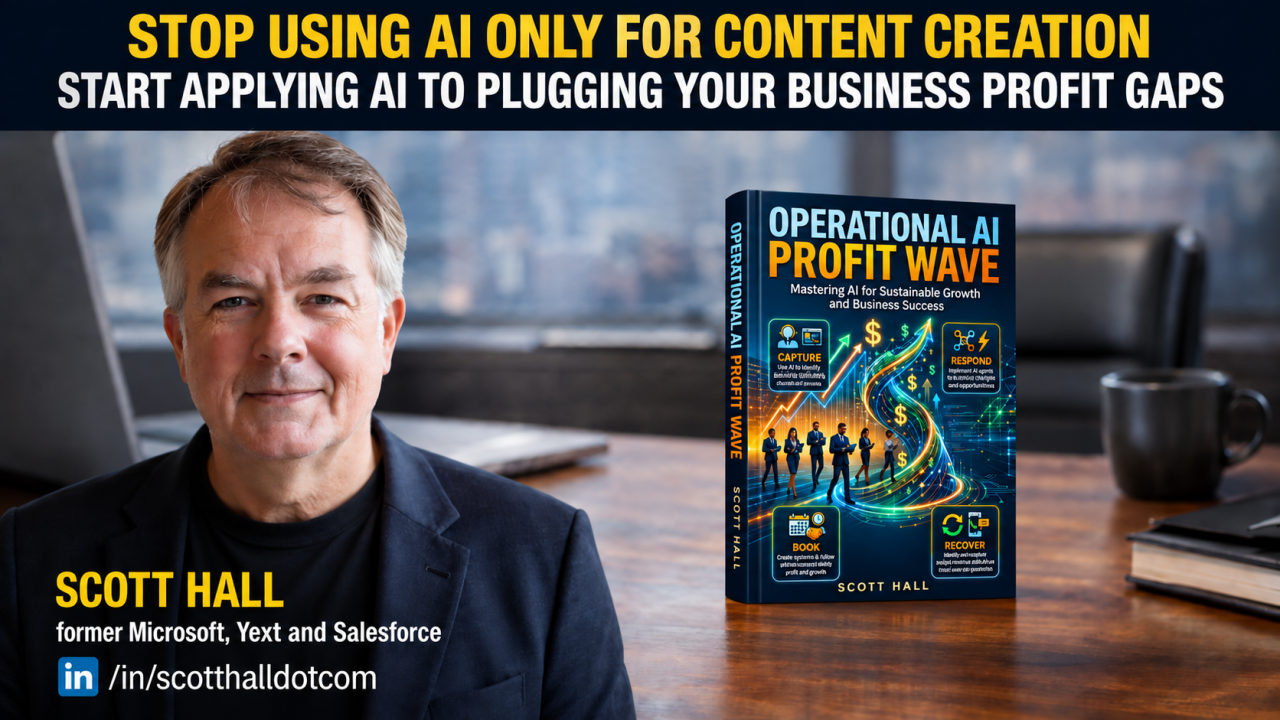
Scott's new book, Operational Profit Wave, is out now. It's a practical guide to turning what your business already does well into a system AI can help you scale, without losing the parts of the business that made it worth choosing in the first place.
|
|
|
Trending this Week:
I talked to a shop owner last week who had spent two months trying to work out how AI was going to reinvent her business. New product ideas, a different service model, a rebrand, some picture of a company that looked nothing like the one she runs now. She was worn out and had shipped nothing.
Meanwhile the businesses actually getting results from AI right now are doing something far less dramatic. They take a strength they already have, better service, deeper expertise, sharper recommendations, smoother buying, and use AI to put it in front of more customers. The company itself stays the same. What grows is the number of people who get the good version of it.
Williams-Sonoma is the clearest example this week, and the conversion numbers are hard to argue with. This is the shift worth paying attention to: AI as a way to amplify what already works. The teardown-and-reinvent version is the one burning people out. MORE →
Today's Issue:
| ▶ 3 AI tools for producing better marketing and customer-facing content |
| ▶ A retail case study where AI-guided shopping is converting at triple the normal rate |
| ▶ A growth hack for turning your best salesperson's knowledge into an AI-powered customer experience |
This week is about moving AI closer to the customer and closer to the expertise you already have.
Let's get into it. 👇
|
|
|
🚀 AI TOOLS OF THE WEEK
|
|
Tool #1
Fotor
Summary
Fotor is an AI visual creation and photo editing platform for businesses that need marketing images without a designer on payroll. It can generate images from a prompt, swap or clear backgrounds, clean up product photos, and resize a piece of creative for every channel you post on.
Why It Matters
Marketing runs on a constant feed of visuals. Ads, emails, landing pages, social posts, and product listings all need art, and for a small team that production line becomes a bottleneck fast. Fotor turns a rough idea or a plain product shot into something campaign-ready in a few minutes.
|
Scott's Take
"The win here is more shots on goal. Five versions of an ad used to eat an afternoon, and now it takes ten minutes, so you can test different hooks and offers instead of betting the quarter on one design you hope works."
|
|
|
|
Tool #2
BrandJet
Summary
BrandJet puts outreach and brand monitoring in one place. You can run campaigns across email, LinkedIn, WhatsApp, and Instagram while tracking what people say about your brand, your competitors, and your category, with AI handling the sentiment read.
Why It Matters
Most teams keep listening in one tool and outreach in another, and the two never talk. BrandJet connects them, so what you learn from the conversation can shape the conversation you start next.
|
Scott's Take
"Your market hands you clues all day long. People complain, compare, praise, and pick apart the stuff they wish worked better, and most of it goes straight past you. Pulling those signals in is useful only when you act on them. Monitoring for its own sake is a dashboard nobody opens twice."
|
|
|
|
Tool #3
FrameOS
Summary
FrameOS builds polished demos of iOS and Android apps from your Mac. You record the app in use, layer in camera and mic footage, add zooms, pans, transitions, and masks, then export finished video or stills.
Why It Matters
If you sell software or an app, showing the thing working communicates more than another paragraph of copy. One clean walkthrough can become an ad, an onboarding lesson, a sales demo, a support clip, or a landing page section.
|
Scott's Take
"Put it on screen whenever you can. If your product does something impressive, do not make the customer picture it from a block of text. Show the moment and let it land."
|
|
|
|
Sponsored
Earn rewards for your business with a referred Chase credit card. See the offer →
|
|
📖 AI IN THE REAL WORLD
|
Williams-Sonoma's AI Shoppers Are Converting at 3X
Williams-Sonoma built an AI shopping assistant called Olive on its main site. Customers use it to find products and get help moving through the buying process. According to the company, shoppers who use Olive convert at three times the rate of shoppers who don't.
The company has since rolled out a second assistant, Otto, for the Pottery Barn brands. Otto helps customers narrow choices, coordinate pieces that go together, answer specifics like rug sizing and outdoor materials, and pull in a human designer when the situation calls for it. Williams-Sonoma says more than 70% of Otto conversations wrap up without needing a person.
Personalization is doing heavy lifting too. The company reports that a visit with a personalized experience now brings in roughly nine times the revenue of an average visit, up from about two times a year earlier. CEO Laura Alber has been clear that the hands-on, service-heavy parts of the business stay human, though the processes around them can be sharpened by AI.
|
Scott's Take
"The 3X number grabs the headline, and the real lesson sits underneath it. Williams-Sonoma did not build this for show. It took decades of product knowledge and first-party data and made that easy for every shopper to tap. Ask what your business already knows cold that AI could hand to every customer. That is the interesting question."
|
|
|
|
Sponsored
Email, docs and collaboration tools your whole team can share. See Google Workspace →
|
|
⚡ AI GROWTH HACK OF THE WEEK
|
Turn Your Best Salesperson Into an AI Asset
The Strategy:
Your best salesperson or service rep answers the same set of questions every week, and the way they answer is worth money. Those conversations are the seed of an AI-powered customer experience, and you can start capturing them today.
1. Collect ten real questions. Pull the ten questions customers ask most before they buy, straight from your inbox, call log, and chat history, in the customer's own words.
2. Record the real answers. Have your best person answer each one the way they would on a live call, including the questions they ask back, the objections they expect, the recommendations they tend to make, and the moments they would steer someone toward a different option.
3. Run it through AI. Paste the questions and answers into the prompt below and let the model organize them into a working structure, then surface the questions you have not covered yet.
4. Review and keep feeding it. Fix what the model got wrong, add the gaps, check it against a few real call recordings, and repeat as new questions come up.
|
The AI Prompt to Steal
"Act as a customer experience strategist. Below are common questions our customers ask before buying, along with how our best salesperson answers them. [PASTE QUESTIONS AND ANSWERS] Organize this into an AI customer-assistance guide. For each question, give the customer's likely intent, the best answer, useful follow-up questions, relevant recommendations, common objections, and the situations where the AI should hand off to a human. Then list five more questions customers are likely to ask that we have not covered."
|
Why This Works:
Williams-Sonoma's edge comes from what the assistant knows. You may not have decades of structured data, but you have years of your team answering customer questions and steering decisions, and almost none of it is written down. Capture it now and you have raw material for sales scripts, onboarding, website copy, and support training long before you switch on anything customer-facing.
|
|
Wrapping Up
This week's tools all sit at the same point: how your business shows up and responds. Fotor gets more creative options in front of you so testing beats guessing. With BrandJet, what the market says feeds back into what you say next. And FrameOS turns a product into a demo people watch, rather than a description they have to trust.
Then Williams-Sonoma shows what happens when AI moves right up next to the customer. The gains come from making expertise and recommendations available at the exact moment a customer is deciding. The hands-on parts people actually value stay human.
That is worth sitting with. You are holding years of knowledge inside old emails, sales calls, support replies, and the heads of a few key people. That knowledge is turning into one of the most valuable AI assets you own.
So here is the better question to chew on. How can AI help more customers get the experience that already makes you worth choosing?
|
|
Keep profiting,
Scott Hall
AI Profit Letter
|
|
You're receiving this because you subscribed to the AI Profit Letter.
Better Online Info LLC | AI Profit Letter | 2150 NJ-35, Suite 250, Sea Girt, NJ 08750
|
|