|
|
WEDNESDAY, OCTOBER 14, 2026
|
|
📘 New Free Guide · Just Released
|
|
|
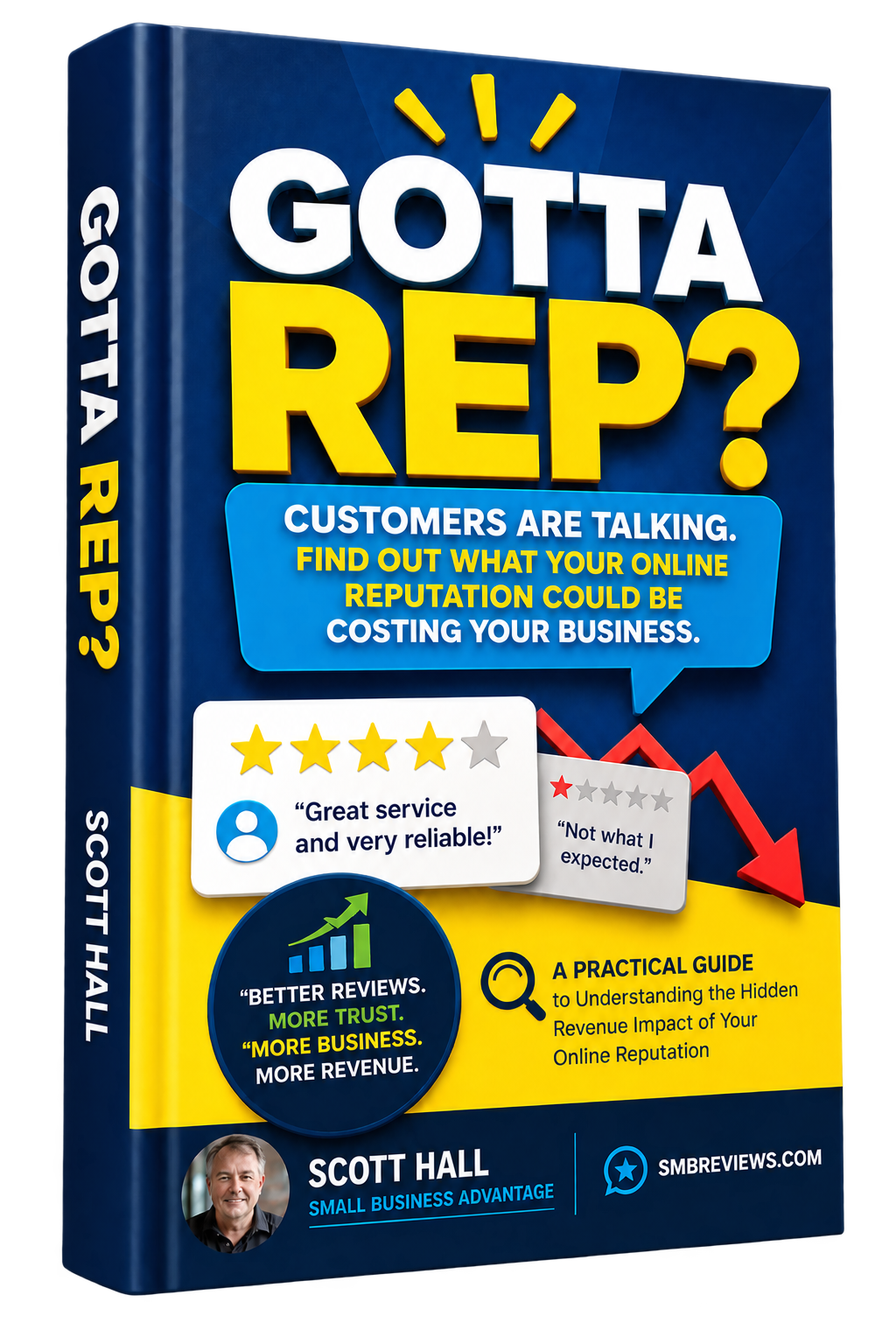
New Free Guide! You'll discover why prospects can be interested in your business, look you up, and quietly choose someone else based on what they find online.
You'll also see why reviews should be treated as more than compliments. They can become part of the system that helps turn interested prospects into customers.
|
|
|
Every week we break down practical uses of AI to build smarter systems and scale faster, resulting in more profitable workflows in your business.
Trending this Week:
Most small businesses don't monitor competitors in any formal way. Someone checks a website, pricing page, or social feed when they think of it, which means important changes can be easy to miss.
AI is starting to change that.
The first wave of AI was mostly about creating things: writing emails, summarizing documents, generating content. Newer systems can also monitor information, support ongoing workflows, coordinate marketing tasks, and handle parts of customer communication.
That shifts the question. It's no longer just, What can AI create for me?
It's also, Where can AI keep watch, follow through, and reduce the amount of manual work happening in the background? And once AI starts touching more of the business, the order you add those systems matters. MORE
Today's Issue:
| ▶ Two tools: one that watches your competitors for you and one that coordinates your marketing |
| ▶ A look at how a major appliance maker uses AI for customer conversations after the sale |
| ▶ A growth hack for turning real customer questions into a smarter sales and support system |
This week is about AI moving beyond content creation and into the day-to-day work of running a business, and how to decide where it should go first.
Let's get into it. 👇
|
|
|
🚀 AI TOOLS OF THE WEEK
|
|
Tool #1
Summary
Peersheep is an AI-powered competitor monitoring tool. It checks your competitors' pricing, changelogs, documentation, and careers pages every hour, and when something meaningful changes, it sends you a short briefing so you don't have to keep checking those sites yourself.
Why It Matters
Competitors reveal a lot through small moves. A new pricing tier can signal a shift in strategy, and a wave of job openings can point to expansion. Documentation and changelog updates show where a competitor is investing before any announcement. Peersheep packages those signals into something you can keep up with.
|
Scott's Take
"Competitive research usually happens once and then sits in a folder. Turning it into something that runs on its own means you hear about a pricing change or a hiring push while you can still do something about it."
|
|
|
|
Tool #2
Summary
Okara positions itself as an AI CMO. You give it your website, and it analyzes your product, your competitors, and your brand. Then it coordinates specialized AI agents across SEO, AI search visibility, Reddit, X, LinkedIn, creator marketing, content, and UGC video, and it keeps you in the approval process along the way.
Why It Matters
Most owners know they should be doing SEO, social media, content, and community marketing. Finding the hours to do all of them consistently is where it falls apart. Okara aims to close that gap by coordinating separate agents off one shared picture of your business, which moves AI closer to an actual marketing operation than a pile of separate tools.
|
Scott's Take
"This is where agents start to matter for small businesses. Plenty of owners have more marketing ideas than they can execute, and another idea generator won't change that. A system that coordinates the channels while you keep final approval could. I'd start with one channel and watch what it produces before letting it near the rest."
|
|
|
|
Sponsored
You can't afford to be silent on ChatGPT, Gemini, or Perplexity find out why
|
|
📖 AI IN THE REAL WORLD
|
SharkNinja's AI Agents Are Handling 20,000 Customer Chats a Week
According to the case study, SharkNinja, the company behind Shark vacuums and Ninja kitchen appliances, now has AI agents handling around 20,000 customer chats every week.
The agents go beyond helping people buy. Customers can scan a QR code on a product to get setup help and find replacement parts, and they can ask questions along the way. Salesforce also reports an 11% conversion rate on shopping-enabled AI chats, though it doesn't disclose the baseline that number is measured against.
|
Scott's Take
"Most owners think of AI customer service as a cheaper, faster way to answer support tickets. The conversation after the purchase is worth more than that. It helps customers get more out of what they bought and builds a relationship that sets up the next sale. For a small business, a first step could be as modest as giving every customer an easy way to ask an AI assistant questions after they buy, with a person ready to step in when it gets stuck."
|
|
|
|
Sponsored
Business credit cards built for growing companies. Apply with Chase for Business
|
|
⚡ AI GROWTH HACK OF THE WEEK
|
Turn Customer Questions Into an AI Sales Playbook
The Strategy
Your customers already tell you what they need, in your email, your DMs, your support messages, and your sales conversations. Collect those questions and organize them, and you have the start of a knowledge base that could later power your sales team, your support, your website chatbot, or an AI agent.
1. Collect 20 real questions. Go through your email, DMs, support messages, and sales conversations, and pull out the questions customers ask before and after they buy.
2. Sort them into groups. Organize them into pre-purchase questions, objections, product questions, setup, support, and post-purchase opportunities.
3. Draft the answers. Have AI write a clear response to each one in your brand voice, and mark where an answer could lead naturally to a sale, an upsell, an additional product, or a next step without feeling pushy.
4. Flag the handoffs. Identify the questions where an AI assistant should pass the conversation to a person instead of answering on its own.
|
The AI Prompt to Steal
"Act as a customer experience strategist for my business. Below are real questions that customers and prospects ask us regularly.
[PASTE QUESTIONS]
Sort them into logical categories, such as pre-purchase questions, objections, product questions, setup, support, and post-purchase opportunities.
Write a clear, helpful answer to each question in our brand voice. Point out where an answer could lead naturally to a sale, an upsell, an additional product, or a next step without sounding pushy.
Finally, list the questions where an AI assistant should hand the conversation to a human instead of answering on its own."
|
Why This Works
The best AI customer experience begins with knowing what customers actually need, long before any AI gets involved. Organizing real questions gives you a usable knowledge base today and a foundation for automation later. It also lets you bring AI into customer conversations a piece at a time instead of handing everything over at once.
|
|
A Note on Where to Start
There are plenty of AI tools you could add to your business tomorrow. The harder question is whether you're adding them in the right place.
A good tool won't fix a process you haven't diagnosed first.
That's the idea behind my book, Operational AI Profit Wave. It shows you how to find where money and time are leaking, fix the friction, measure what changes, and only then expand what is working.
If you've ever bought an AI tool that did exactly what it promised but made no real difference to the business, this book is for you.
Get it at: scotthall.ai.
|
|
Wrapping Up
Peersheep and Okara handle two very different jobs: keeping watch on competitors and coordinating marketing across channels. They point the same direction, though. AI is moving past helping us create things and into monitoring and coordinating work that used to depend on someone remembering to do it.
SharkNinja takes it a step further by putting AI into the customer experience after the sale, where it can answer questions and walk someone through setup, and the same conversation can lead to the next purchase. The growth hack gives you a low-risk way to start building toward that: gather the questions your customers already ask and organize them before anything gets automated.
Here's the question I'd leave you with: where in your business could AI keep watch on or improve something that currently depends on you remembering to do it? Pick one place and start there, then measure what changes before you add the next.
|
|
Keep profiting,
Scott Hall
AI Profit Letter
Follow Me: LinkedIn
|
|
📕 Operational AI Profit Wave
|

|
|
|
|
|
You're receiving this because you subscribed to the AI Profit Letter.
Better Online Info LLC | AI Profit Letter | 2150 NJ-35, Suite 250, Sea Girt, NJ 08750
|
|