
|
|
WEDNESDAY, NOVEMBER 4, 2026
|
|
Every week we break down practical uses of AI to build smarter systems and scale faster, resulting in more profitable workflows in your business.
|
|
Sponsored By
|
|
Trending this Week:
Better Stack recently put out a video walking through Anthropic's guidance on prompting Claude Opus 5.5, and it stung a little. Habits a lot of us picked up two years ago, such as opening with "think step by step," now slow the model down and pad the bill. What works is handing over the whole task at once and saying exactly what done looks like.
The same gap shows up at the company level. According to a new BearingPoint study of 1,050 senior leaders, almost three-quarters of companies using AI report measurable financial results, yet only 13% have scaled AI the way their original business case planned. Regulation topped the list of hurdles at 40%, ahead of legacy IT at 34%.
Companies seeing meaningful results from AI are giving employees closest to the work the tools and training to use it effectively, starting with how to ask for exactly what they need. Neither move needs a bigger software budget, and that's where this week's issue lives. MORE →
Today's Issue:
| ▶ New tools for team videos and customer conversations, plus an AI assistant for LinkedIn |
| ▶ How NewMark Merrill turned 13 regular employees into AI builders |
| ▶ A prompt rewrite that tells AI exactly what done looks like |
This week is about who should be driving AI in your business, and how they should talk to it once they are.
Let's get into it. 👇
|
|
|
🚀 AI TOOLS OF THE WEEK
|
|
Tool #1
ngram
Summary
ngram is an AI video generator that turns a written brief or a screen recording into explainers, product demos, onboarding and training videos. You describe the idea and who it's for, and it lays out every scene for your approval before it builds anything. Then it writes the narration, scores the soundtrack, generates the visuals and animates them, and you can ask for changes in plain language or edit frame by frame in its timeline. Teams share a Brand Kit with colors, fonts, logo and reusable intros, so everyone's videos look like they came from the same company.
Why It Matters
Video is the format most small businesses know they need and keep putting off, because a two-minute training video can eat a week. ngram shrinks that to a brief and a review, and the scene plan lets you catch a wrong direction before anything gets made.
|
Scott's Take
"The approval step is what sold me. I'd rather fix a bad plan in two minutes than sit through a finished video that missed the point. Start with the new-hire training video that's been on your list for months."
|
|
|
|
Tool #2
Knocket
Summary
Knocket pulls every way people reach you into one inbox. Paste one script tag and a live chat widget shows up on WordPress, Shopify, React or plain HTML, and there's a hosted contact page you can share as a link. Messages from your app, Telegram, WhatsApp, Instagram and email land in the same place. You upload your docs and FAQs, and its AI agent answers the routine questions and passes the rest to a person.
Why It Matters
A lead who asks a question at 9 p.m. and hears nothing usually buys from whoever answers first. Knocket covers the after-hours questions with your own answers and hands the tricky ones to you with the whole conversation attached, which is the handoff most AI support setups get wrong.
|
Scott's Take
"Feed it your real FAQs before you turn the AI on. An agent answering from guesswork does more damage than a contact form that sits there overnight. Watch the first week of handoffs closely and you'll see which answers your docs are missing."
|
|
|
|
Tool #3
Bearconnect
Summary
Bearconnect is a LinkedIn automation platform that covers both content and outreach. Its AI learns your voice from your existing writing and drafts posts you review before they're scheduled, and a feature called Post Magnet replies to comments to keep threads active. On the outreach side it sends connection requests and follow-ups, withdraws stale requests, pulls warm leads from the people engaging with your posts and syncs with HubSpot and Pipedrive. Agencies and sales teams can run several LinkedIn accounts from one dashboard with role-based access.
Why It Matters
Most business owners know LinkedIn pays off when you show up consistently, and almost nobody has the time to do it. A tool that drafts in your voice and spots who's already engaging hands you a shortlist of people who already know your name.
|
Scott's Take
"I'd lean on the content side and go slow on the outreach. LinkedIn's terms restrict automated activity, and your account is worth more than a few extra connection requests. Let the AI draft, then put your own eyes on every message before it goes out."
|
|
|
|
Sponsored By
AI Frontier Models...an Accelerant for Your Company
|
|
📖 AI IN THE REAL WORLD
|
NewMark Merrill Turned 13 Regular Employees Into AI Builders
According to ICSC, NewMark Merrill, a retail real estate company, started by giving every employee a four-hour AI 101 session. Then it picked 13 people from nine departments, from accounting and collections to leasing and HR, and put them through a six-session program with the AI training firm Adaptig to build tools for their own daily work.
The interesting part is who they picked. The company skipped the obvious choices, the tech experts and early adopters. It went looking for people who knew their department inside out and could spot a broken process and build a fix. It also wanted people who could explain that fix clearly and get coworkers to try it, including folks willing to host a lunch-and-learn.
According to the company's August announcement, participants built 53 solutions and documented 3,783 hours of recovered capacity a year, close to two full-time positions. Self-rated output quality rose from 3.2 to 4.3 on a five-point scale. Underwriting document review dropped from eight hours to under one, and CAM reconciliations that used to take a full day now take minutes. Over in collections, a supervisor built a real-time dashboard tracking each legal matter's claim amount against its legal spend. Those numbers are self-reported, and Adaptig's CEO, Mateo Romano, was clear that employees still check everything before it reaches a boss or a client.
|
Scott's Take
"NewMark's CEO said the hard part of getting technology adopted is almost never the technology, and I've watched that play out for decades. The person who complains loudest about a broken process already knows what the fix needs to do. Give that person training and permission, and quit waiting on a consultant to tell you where the problems are."
|
|
|
|
Sponsored By
|
|
⚡ AI GROWTH HACK OF THE WEEK
|
The Define-Done Prompt Rewrite
The Strategy
According to Better Stack's breakdown of Anthropic's prompting guidance for Opus 5.5, the newest models do their best work when you hand over the whole task at once and spell out what finished looks like. The old safety phrases mostly add tokens and wait time. Take one prompt your team runs every week and rebuild it around a clear finish line.
1. Pick your most-used prompt. The weekly report or the client recap, whichever runs most often, because that's where the savings add up.
2. Strip the filler. Delete phrases such as "think carefully" and "think step by step." The model plans its own steps now.
3. Load the full context up front. Paste in the background, the audience, examples of past work you liked and any constraints, so the AI doesn't have to guess or stop to ask.
4. Write the finish line. Describe what done looks like in specifics: length, format, who it's for, what it must include and what it should leave out.
|
The AI Prompt to Steal
"Here is the full task: [DESCRIBE THE TASK]
Background you need: [PASTE CONTEXT AND EXAMPLES]
This is done when: [LIST THE REQUIREMENTS: LENGTH, FORMAT, WHAT IT MUST INCLUDE, WHAT IT MUST LEAVE OUT]
Work through the whole task without stopping for status updates. If something critical is missing, ask me before you start. When you finish, check your output against every item in the done list and tell me anything you couldn't meet."
|
Why This Works
Newer models are built to plan their own steps, so telling them how to think adds very little. What they can't do is guess the result you have in your head. A clear done list gives the model a target, and you get a checklist to review against, so the first draft comes back closer and the second round goes faster.
|
|
Wrapping Up
A 13% scaling rate sounds grim until you look at what the companies on the right side of it are doing. NewMark Merrill got there by training the people who already knew where the work was broken and then measuring what they built.
Front's customer stories point the same direction. According to Front, Boundless Immigration saves more than 10,000 hours a quarter by letting AI handle the tagging and triage while its team handles the people.
This week's tools fit that picture. ngram makes you approve the plan before it builds anything, and Knocket hands the hard questions to a person with the full conversation attached. Bearconnect works best when your eyes are on every message it sends.
Find the person on your team who complains loudest about a broken process and hand them this week's prompt rewrite. Then check back in a month and see what they've built.
|
| aipl-2026-11-04-sign-4b38669d
Keep profiting,
Scott Hall
AI Profit Letter
Follow Me: LinkedIn
|
aipl-2026-11-04-bottom-5687eab3
|
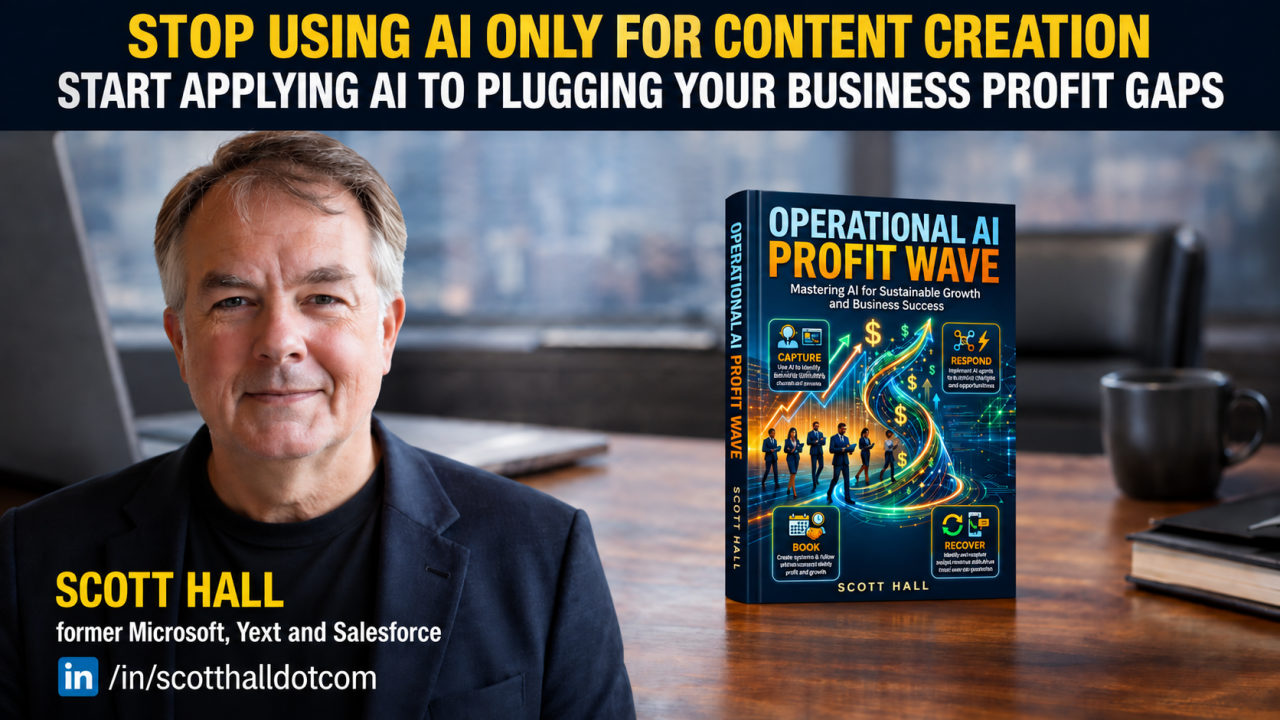
📕 Operational AI Profit Wave
|
aipl-2026-11-04-img-8b05402d
|
|
|
|
| aipl-2026-11-04-footer-65bed9ae
You're receiving this because you subscribed to the AI Profit Letter.
Better Online Info LLC | AI Profit Letter | 2150 NJ-35, Suite 250, Sea Girt, NJ 08750
|
|